|
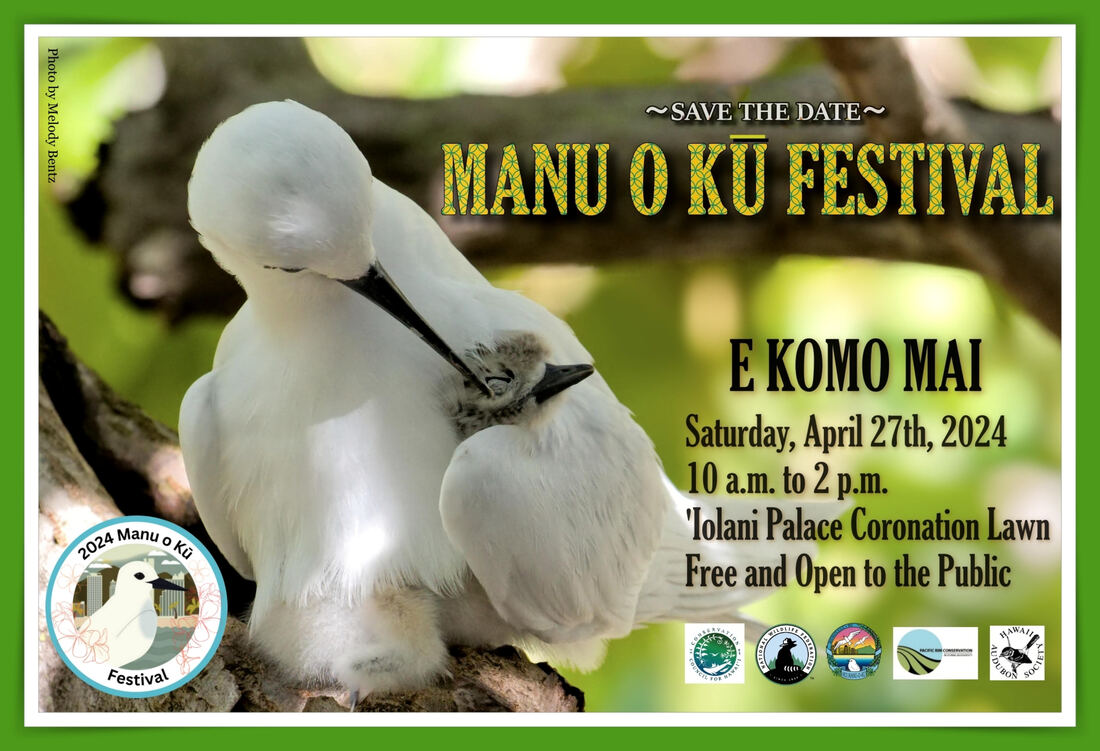
The 8th annual Manu O Ku Festival is just days away! Make plans to join the growing Manu O Ku Ohana on the grounds of the Iolani Palace from 10AM to 2PM this Saturday, May 6. There will be booths manned by several of the groups and organizations that are working together to help Honoluluʻs official bird thrive in our urban environment. And there will be performances of Hawaiian dance and music, including a free mini concert by ukulele virtuosos Corey Fujimoto and Kalei Gamiao. And there will games and prizes for keiki. The guests of honor - the Manu O Ku - are already there, a half dozen tending eggs and chicks in trees on the Palace grounds. So bring the whole family and come join in this yearʻs celebration of our Manu O Ku!
Join us Sunday, April 30, for a guided tour of portions of the UH campus where White Terns are currently nesting. Weʻll meet in the SOEST courtyard (red circle on attached map snippet) at 0900 for this walk, sponsored by the Hawaii Audubon Society and the Hui Manu o Ku. Plenty of parking in the parking lot behind the Kennedy Theater (blue square on the map snippet). RSVP by text to 808-379-7555 to reserve your spot. 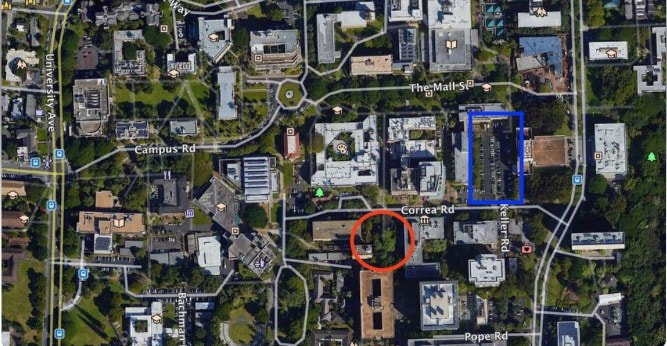 Join us on Saturday, April 29, from 9:00 to 10:30 for a walk that will take in some of the active White Tern nesting spots in the heart of Waikiki. Meet behind the stage at the base of the big banyan tree at the Royal Hawaiian Center on Kalakaua Avenue at 9:00 if you'd like to join us. RSVP by text to 808-379-7555 to reserve your place.  Join us Sunday, April 16, for a guided tour of portions of the UH campus where White Terns are currently nesting. We'll meet in the SOEST courtyard (red circle on attached map snippet) at 0900 for this walk, sponsored by Hawaii Audubon Society and the Hui Manu o Ku. Plenty of parking in the parking lot behind the Kennedy Theater (blue square on the map snippet). RSVP by text to 808-379-7555 to reserve your spot. 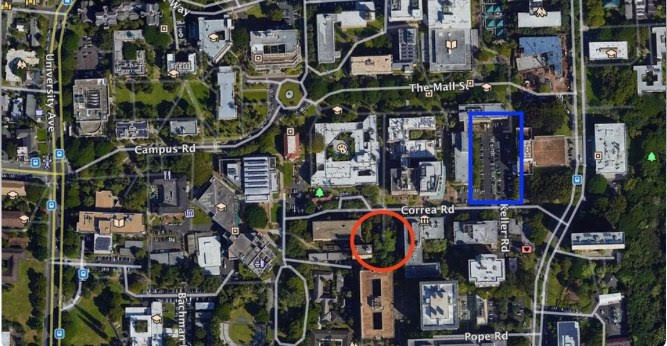 Join us Sunday, January 8, for the first White Tern Walk of 2023! The quiet courtyard at the Biomedical Sciences Building (red circle on attached map) has been transformed into a White Tern nursery with eggs and chicks in most of the trees in this secluded, protected spot on the UH campus. We'll meet in the courtyard at 0900 for the walk. There's plenty of free parking in the adjacent parking lot (blue box on the map). RSVP by text to 808-379-7555 to reserve your spot. 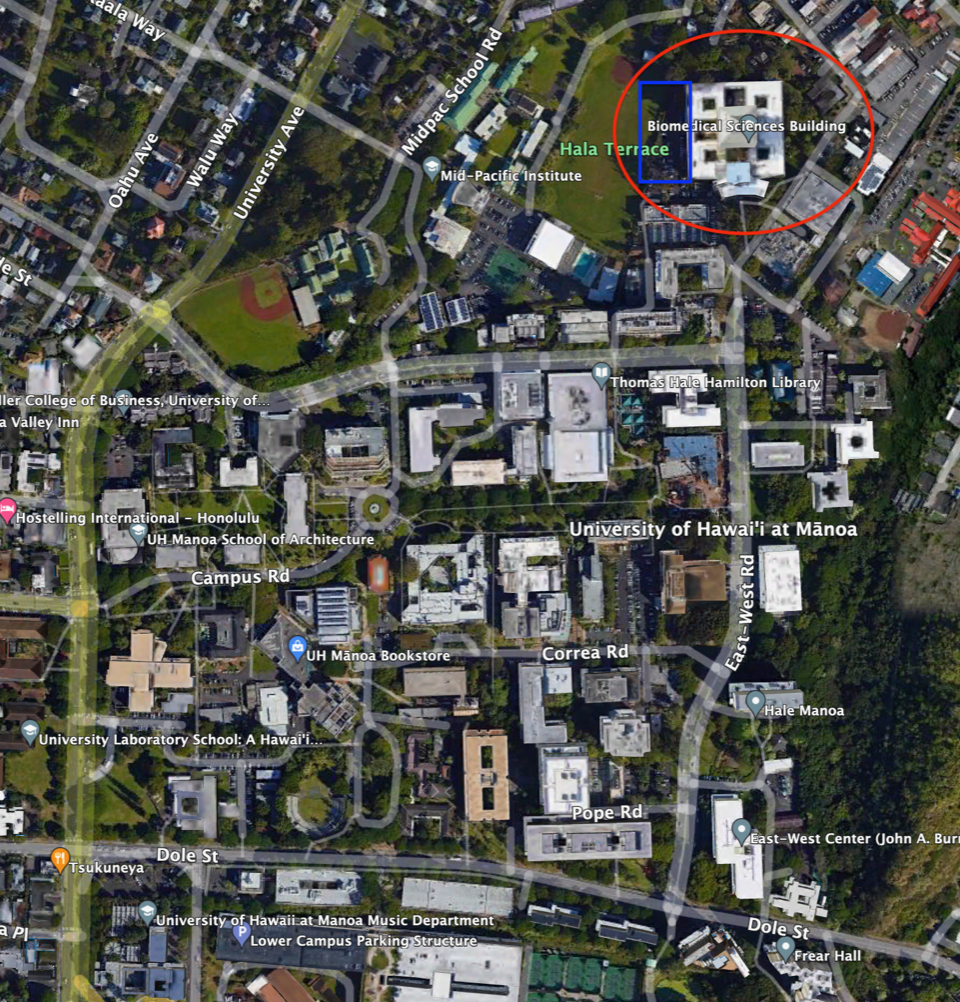 The 2023 White Tern breeding season is getting underway in downtown Honolulu! These walks will feature some of the breeding pairs that have returned to Oahu and have already laid eggs and hatched chicks in the center of the city. Sunday morning is the perfect time to visit the terns peacefully tending eggs and chicks in nesting trees along normally busy downtown streets. Meet in the parking lot in front of the post office across from the Iolani Palace between Merchant and South King Streets at 9:00 on Sunday, November 6 or Sunday, November 13, if you'd like to join us. RSVP by text to 808-379-7555 to reserve your place. 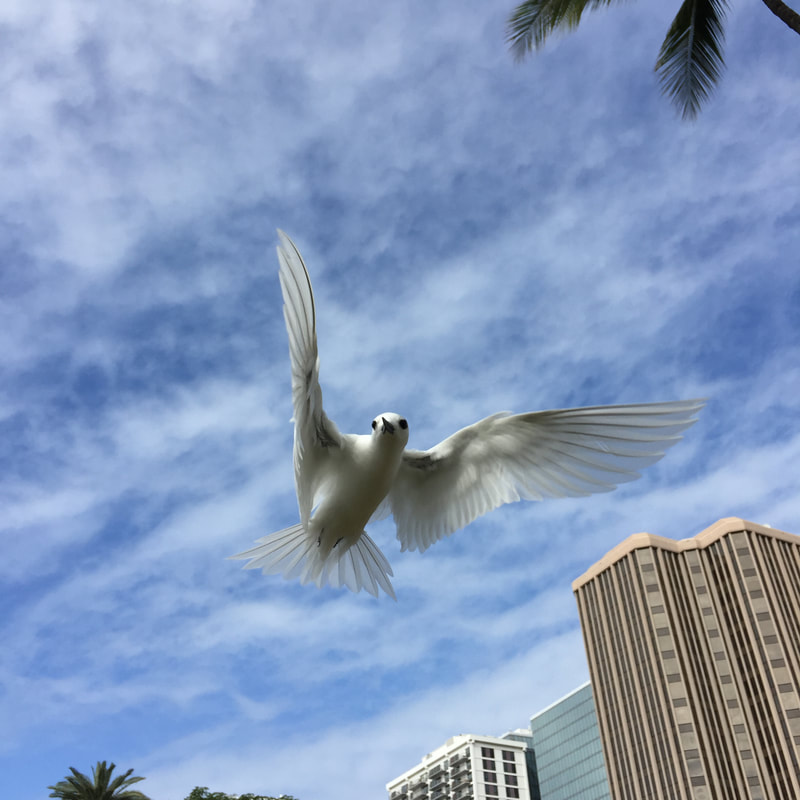 The 2023 White Tern breeding season is getting underway in downtown Honolulu! This walk will feature some of the breeding pairs that have returned to Oahu and have already laid eggs and hatched chicks in the center of the city. Sunday morning is the perfect time to visit the terns peacefully tending eggs and chicks in nesting trees along normally busy downtown streets. Meet in the parking lot in front of the post office across from the Iolani Palace between Merchant and South King Streets at 9:00 on Sunday, October 9, if you'd like to join us. RSVP by text to 808-379-7555 to reserve your place. Join us on Sunday, September 25, from 9:00 to 10:30 for a walk that will take in some of the active White Tern nesting spots in the heart of Waikiki. Meet behind the stage at the base of the big banyan tree at the Royal Hawaiian Center on Kalakaua Avenue at 9:00 if you'd like to join us. RSVP by text to 808-379-7555 to reserve your space. 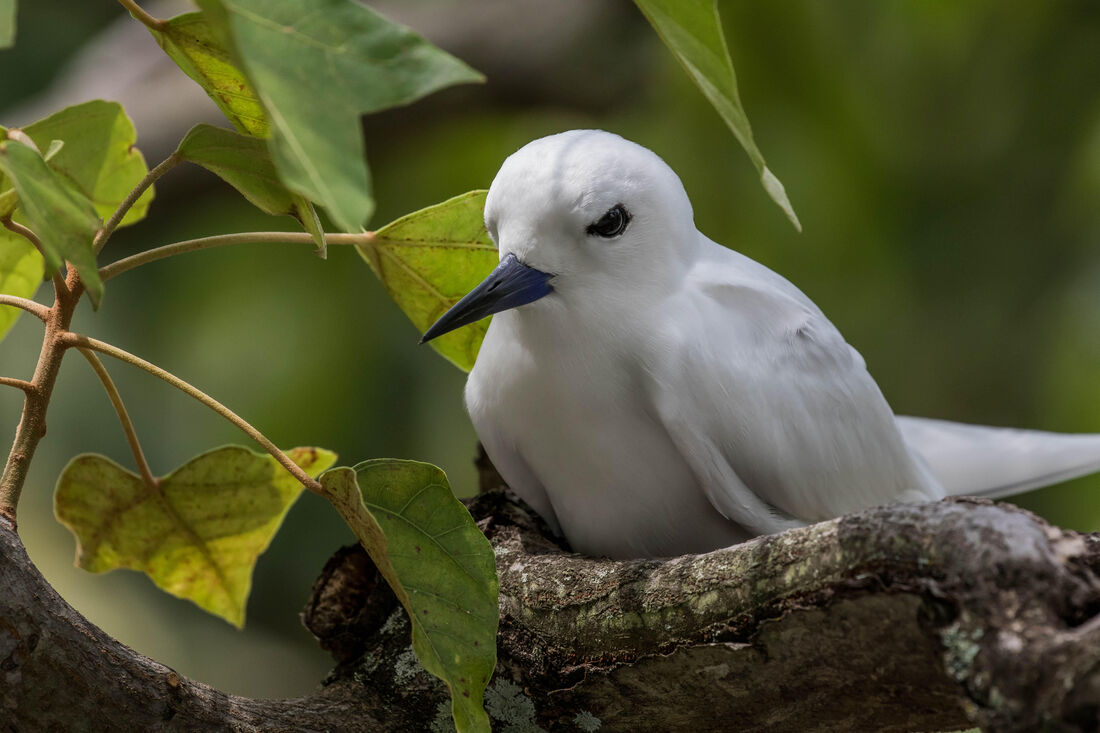 |